Pihlmann Architects | H Arquitectes | Marcel Raymaekers | Urko Sánchez Architects | BC Architects | Assemble | Atelier Luma | Laurie Baker | Bovenbouw | Baubüro In Situ | Jiakun Architects
Globally, we currently manufacture our own weight in new things every week, of which only about 1 per cent is estimated to still be in use six months after purchase. This wreaks devastation on cities and communities in the global south, to which the waste generated by the north is shipped.
This issue identifies circular practices at different scales. In Mallorca, H Arquitectes have turned sandstone from an existing building into nougat-like blocks while in the south of France, rice straw and sunflower stems are used to make new building materials. Whole components are integrated into fantastical concoctions in the work of Marcel Raymaekers and transplanted across borders to relieve housing shortages in Ukraine. Entire buildings are also reused, often repurposing materials and components: Pihlmann Architects reused 95 per cent of the existing materials on site in their fit-out of a 1960s office block in Copenhagen, while disused steelworks are becoming a public park in Hangzhou.
But circular design principles fit awkwardly into linear capitalist production processes. As Michaël Ghyoot and Tom Schoonjans write in this issue’s keynote, ‘The current capitalist configuration simply does not tolerate curbing exploitation.’ Recycling can even help justify business-as-usual; with salvaged bricks thrown in, or recycled plastic, waste is presented as an opportunity for ‘sustainable growth’. Circular practices should instead be coupled with degrowth, encouraging a reduction of waste and the use of bio-based construction materials.
1521: Circularity

cover (above) Zhoushan Community Architecture Team
At the Community Educational Base in Zhoushan Village, China, residents have created an ‘eco-wall’ of spoliated flotsam and jetsam, including old tiles, signs, pots, pans and a ceiling fan. Credit: Kuo Jze Yi of Zhoushan Community Architecture Team
folio (lead image)
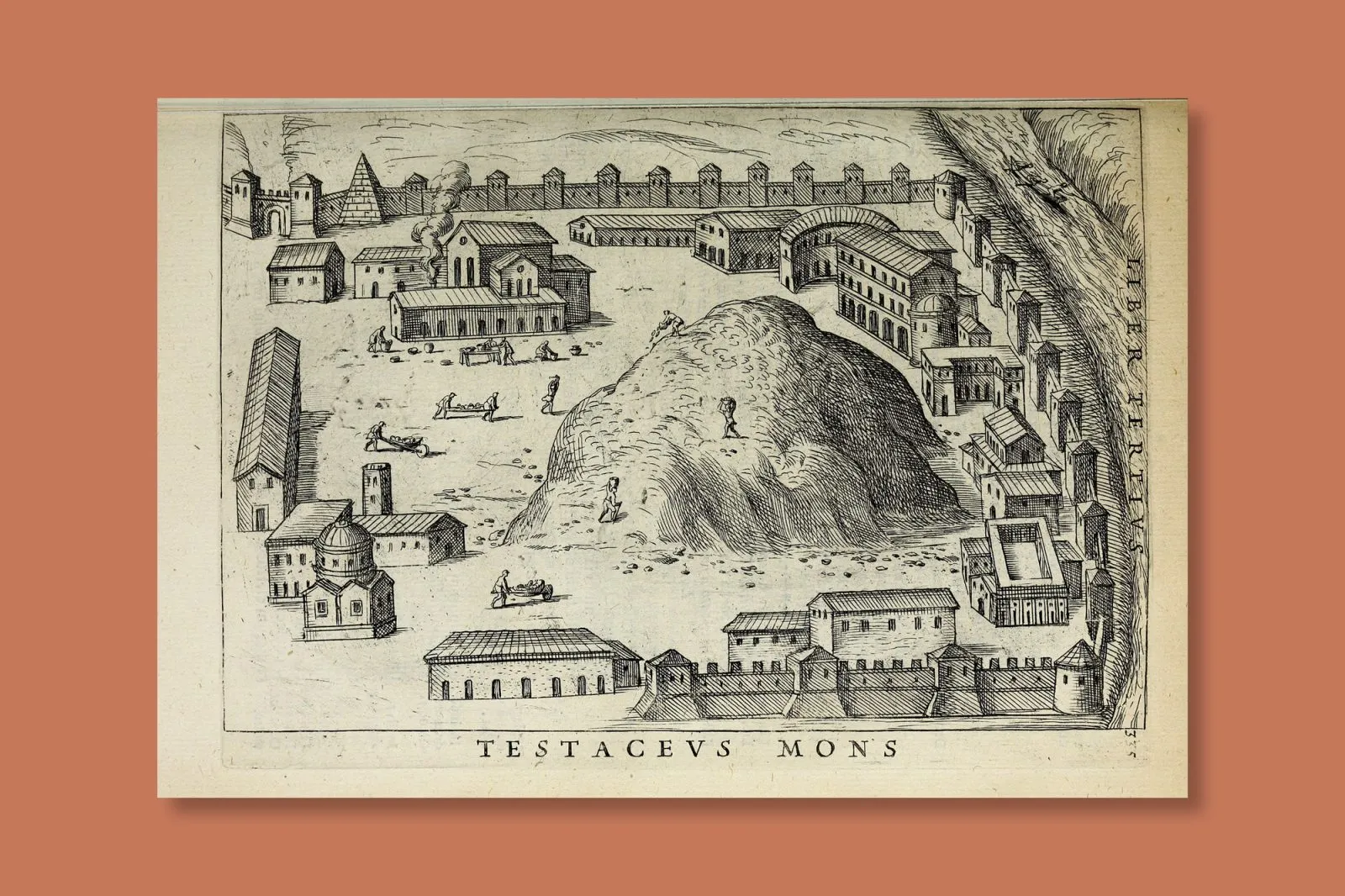
Now part of a buzzing neighbourhood in Rome, Monte Testaccio is an artificial hill comprised mostly of testae, or broken terracotta fragments, accumulated through the consumption of olive oil. The mound is an emblem of the entanglements between urbanity and waste. Credit: Wikimedia
keynote
Break the cycle
Tom Schoonjans and Michaël Ghyoot
building
Thoravej 29 by Pihlmann Architects in Copenhagen, Denmark
Morten Birk Jørgensen
essay
Salvaging for Ukraine
Adam Przywara
building
Housing for people over 65 by H Arquitectes in Palma de Mallorca, Spain
Eleanor Beaumont
reputations
Marcel Raymaekers
James Westcott, Lionel Devlieger, Arne Vande Capelle, Stijn Colonand Aude-Line Dulière
building
Waldorf school campus by Urko Sánchez Architects in Nairobi, Kenya
Peter Muiruri
outrage
Plastic (not) fantastic
Martin Weiner
building
Le Magasin Électrique by Assemble, BC Architects & Studies and Atelier Luma in Arles, France
Manon Mollard
revisit
Laurie Baker Centre in Kerala, India
Rajshree Rajmohan
building
Kielsbroek recycling centre by Bovenbouw Architectuur in Antwerp, Belgium
Christophe Van Gerrewey
building
Transa repair workshop by Baubüro In Situ in Zürich, Switzerland
Kristina Rapacki
building
Grand Canal Steelworks Park by Jiakun Architects and TLS Landscape Architecture in Hangzhou, China
Jacob Dreyer
city portrait
Waste streams across Lagos
Olorunfemi Adewuyi