The AR archive opens a space to revisit architecture as a living conversation. Here you can trace ideas across issues, follow writers on the ground and see how debates around public space, housing, culture and the environment are revisited and reinterpreted. Offering a rich terrain for discovery, pieces in the archive explore ideas which are still today unfurling and can offer a glimpse into the past to amplify and illuminate contemporary architectural discourse.
The end of the year is a great opportunity to reflect on this slower form of journalism, delving into our archive to find the stories that our readers have returned to time and time again. Happy Reading!

1. Kowloon Walled City: Surreal photographs of day-to-day life inside the City of Darkness, AR online, AR editors
‘For residents of the upper levels of the City, the roof was an invaluable sanctuary: a “lung” where they could breathe fresh air and escape the claustrophobia of their windowless apartments below’
2. Thermal Baths in Vals, Switzerland by Peter Zumthor, AR August 1997, Raymund Ryan
‘At Vals, he has created a building concerned not simply with style, image or beautiful materiality, but resonant with atavistic memories of weight, contiguity and enclosure, of sound and enticing illumination’

Credit: Henry Pierre Schultz
3. The New Brutalism, AR December 1955, Reyner Banham
‘Even if it were true that the Brutalists speak only to one another, the fact that they have stopped speaking to Mansart, to Palladio and to Alberti would make The New Brutalism, even in its more private sense, a major contribution to the architecture of today’
4. Revisit: Aranya low-cost housing in Indore, India by Balkrishna Doshi, AR July/August 2019, Manon Mollard
‘Here, there is the heartbreaking feeling that the architectural profession is deeply irrelevant, incapable of addressing human beings’ basic right to shelter’
5. Hassan Fathy (1900–1989), AR February 2020, Viola Bertini
‘For many years Fathy’s projects have been described as postmodern vernacular, and only recently has he been rediscovered as a master who proposed a different idea of modernity’
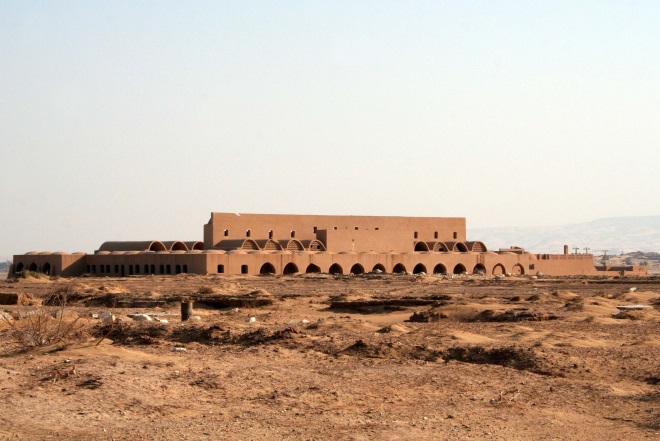
South-west side of Fathy’s New Baris market Credit: Viola Bertini
6. Carlo Scarpa (1906–1978), AR May 2023, Orietta Lanzarini
‘Scarpa transformed 19th-century museums into musées vivants: familiar places that are flooded with natural light and welcome all visitors’
7. The Strategies of Mat-building, AR August 2013, Debora Domingo Calabuig, Raul Castellanos Gomez and Ana Abalos Ramos
‘Mat-building seemed to use new tools that dismantled the compositional principles of the early modern period’
8. Typology: Prison, AR June 2018, Tom Wilkinson
‘Cellularity is a modern invention. Pious reformers turned to mental torture, isolation and enforced reflection’
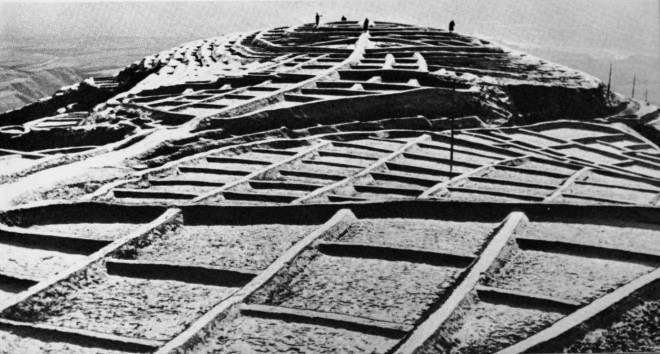
9. Critical Regionalism for our time, AR November 2019, Véronique Patteeuw and Léa-Catherine Szacka
‘Frampton’s engaged theory of the discipline is more important than ever, architecture needs a renewed frame of values in which the ground’s topographic and political nature is fully recognised’
10. The simplicity of Liu Jiakun’s work, AR February 2017, Austin Williams
‘Treasuring the value of ordinary lives will be the foundation of our nation’s revival’
11. Revisit: Louis Khan’s Sher-e-Bangla Nagar, Dhaka, Bangladesh, AR November 2019, Kazi Khaleed Ashraf
‘In allowing nature to invade an artefact, erode its envelope, make it porous, and finally repossess it, Kahn made the dynamics of weathering and landscaping visible’
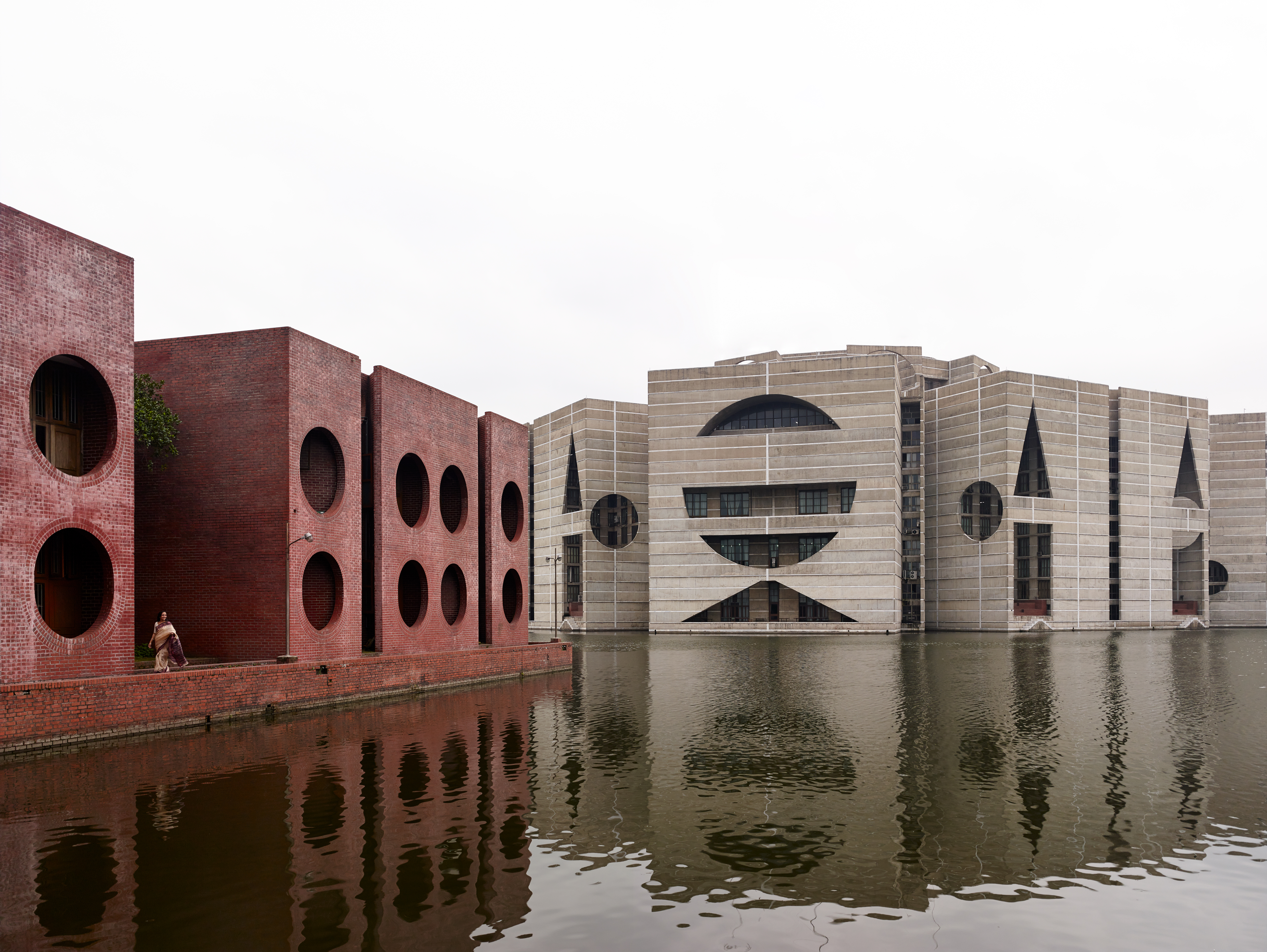
The jewel in the Capitol Complex crown is the fairfaced-concrete National Assembly Building Credit: Grischa Rüschendorf / rupho.com
12. The Interlace in Singapore by OMA/Ole Scheeren, AR March 2015, Rowan Moore
‘The Interlace combines boldness and intelligence in a way rarely seen in housing projects’
13. Revisit: Les Étoiles d’Ivry, Paris, France, by Jean Renaudie and René e Gailhoustet, AR May 2019, Meriem Chabani and John Edom
‘It is an ungraspable anagram of an architecture, a Brutalist ziggurat of cascading terraced gardens and mature trees’
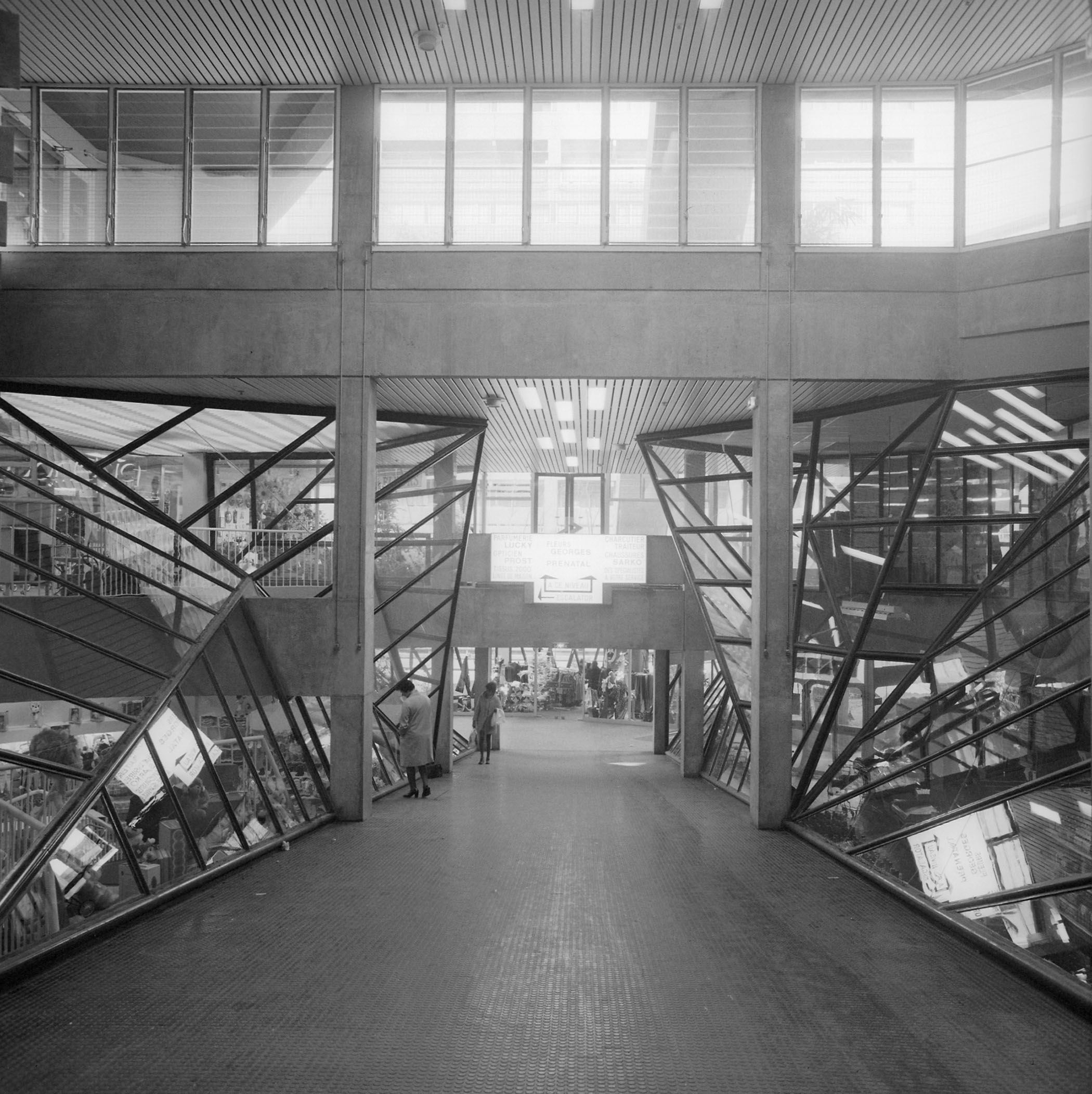
Small shops lines the main concourse
Credit: Centre Pompidou / Bibliotheque Kandinsky
14. Revisit: Wall house in Auroville, India by Anupama Kundoo, AR December 2022/January 2023, A Srivathsan
‘Beyond this wall, the rest of the house is more suggestive of a ‘brick tent’: dramatically open, pavilion-like, free‑flowing, wrapped with brick around and above but ‘without shutting nature out’
15. Revisit: High Line by Diller Scofidio + Renfro and James Corner Field Operations, AR July/August 2024, Peter Lucas
‘The High Line’s successes and shortcomings are as much a product of the neoliberal economy as of its designers’
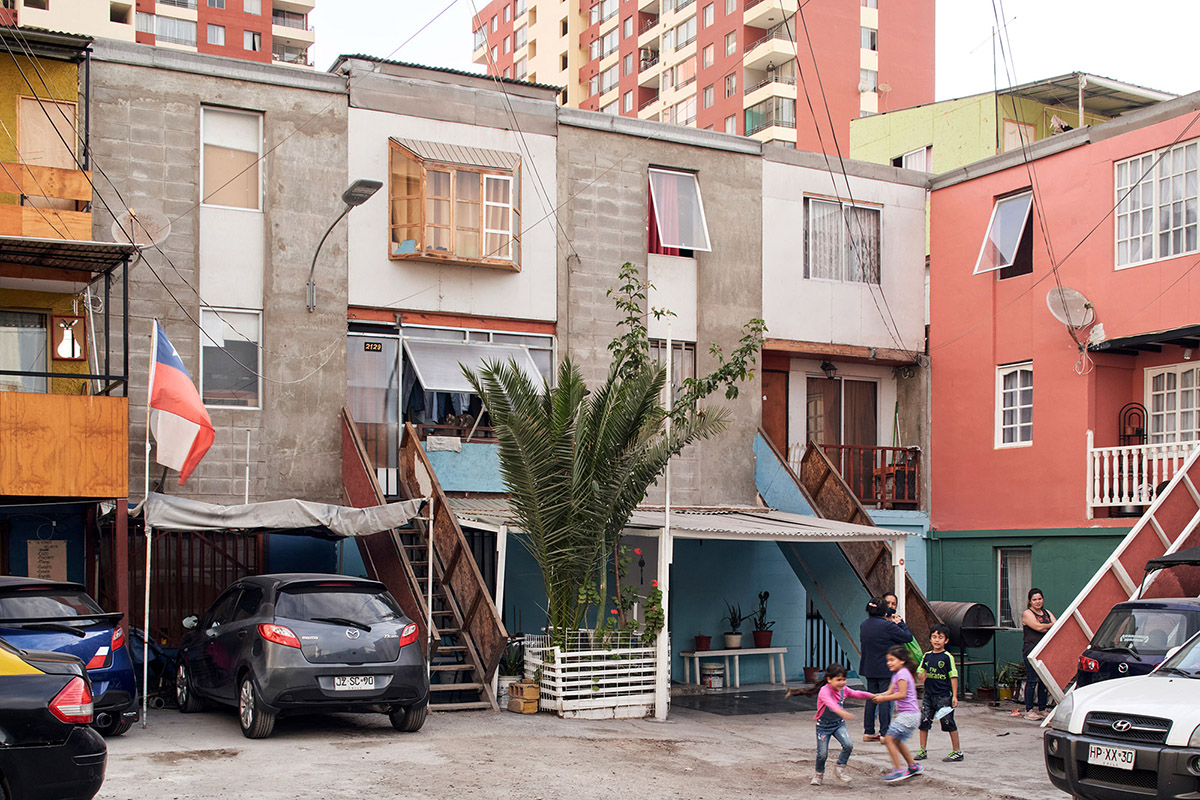
16. Revisit: Quinta Monroy by Elemental, AR December 2020/January 2021, Sandra Carrasco and David O’Brien
‘Residents’ experiences in being active actors in their housing construction has promoted significant engagement and pride’
17. Revisit: Casa Estudio Diego Rivera y Frida Kahlo in Mexico City, Mexico by Juan O’Gorman, AR December 2023/January 2024, Suleman Anaya
‘In their materiality, climatic disposition, colour scheme and specific framing of landscape, the houses belong uniquely to the Mexican setting, while their technological solutions engaged in a dialogue with vanguard global currents’
18. Revisit: BedZED in Beddington, UK by ZEDfactory, AR May 2023, Steve Webb and Paul Downie
‘What will our design descendants say of our own attempts, with the industry today predominantly consuming steel and concrete at an unsustainable rate?’
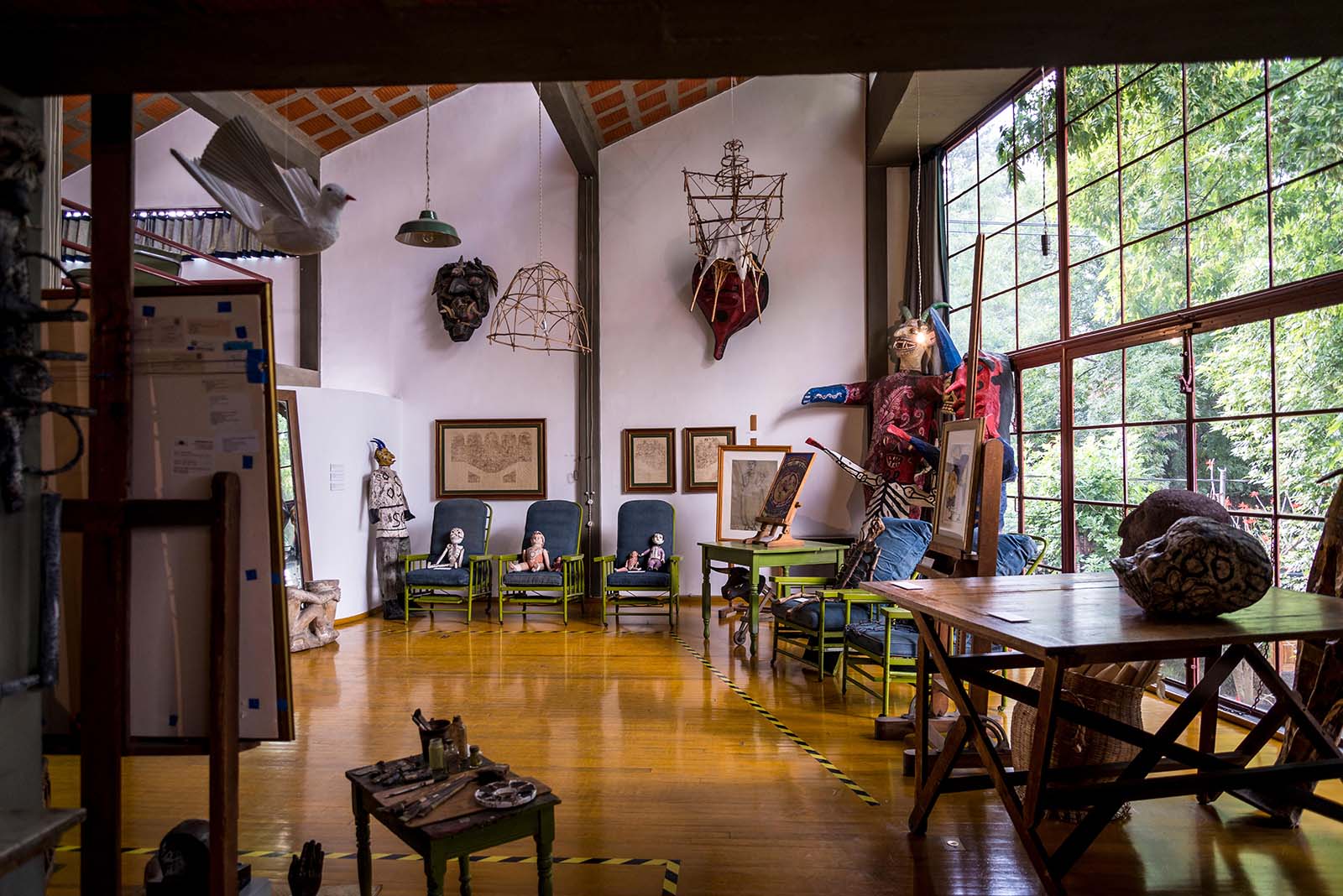
Today, Rivera’s studio space is open to visitors and filled with the painter’s tools and personal objects, including some of his folk and ancient art collection – as the black and yellow hazard tape shows, museographic displays can feel somewhat irreverent
Credit: Bjanka Kadic / Alamy
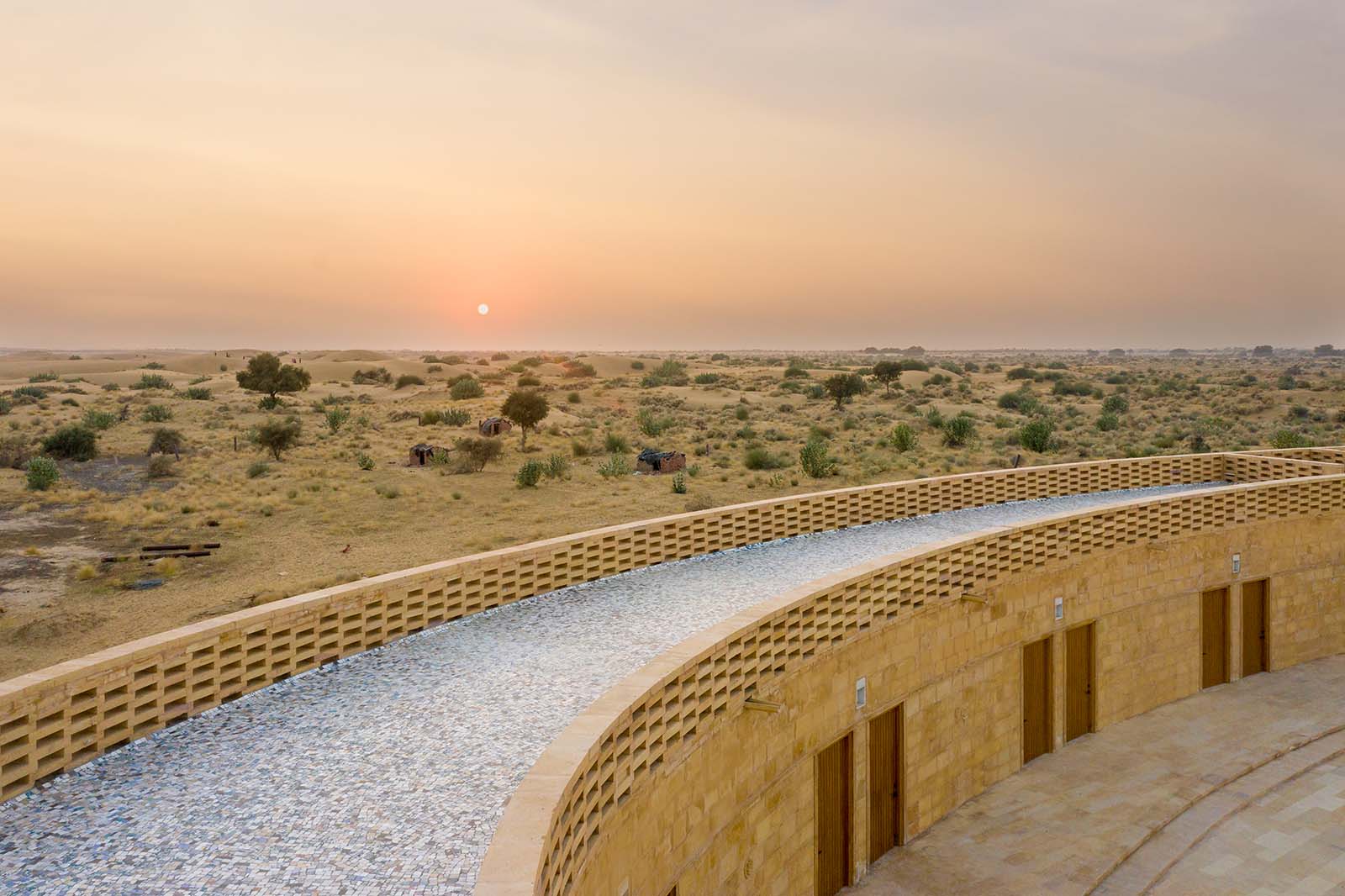
19. Stone oasis: Rajkumari Ratnavati Girls’ School in Rajasthan, India by Diana Kellogg Architects, AR October 2023, A Srivathsan
‘In a place where well-equipped public projects are few, and those built are dreary, the Ratnavati School is popular and offers hope’
20. Building for the blind, AR April 2020, Gabriella Carrillo
‘The space becomes complex, not through artifice, but because it enhances the phenomena of what already exists there’
Subscribe today to join the conversation and help support independent critical architectural writing, and access the AR’s archive.